


Dealership ADAS Calibration: The Fastest-Growing OEM Requirement and the Revenue You Are Giving Away
Dealership ADAS calibration has gone from a niche capability to a mandatory service department function in less than five years. Nearly every new vehicle sold in 2026 has at least one forward-facing camera, and most have a full suite of radar, camera, ultrasonic, and in some cases lidar sensors that require calibration after alignment, windshield replacement, or collision repair. The technology is no longer limited to luxury brands — base-model Corollas, Civics, and Malibus all have ADAS systems that need calibration.
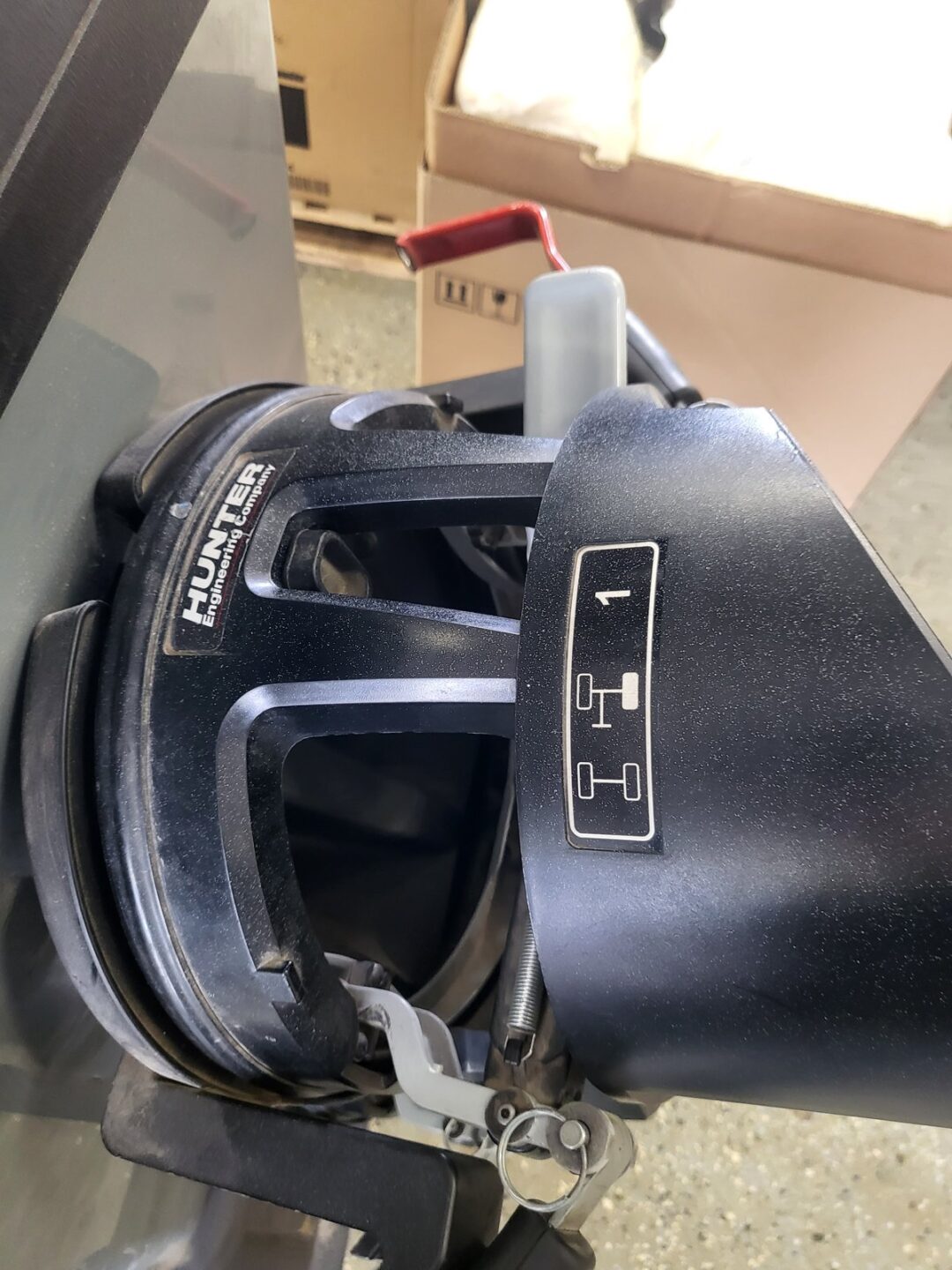
We are Auto Lift Services, and we install ADAS calibration systems in dealership service departments as part of new construction and renovation projects. We work with general contracting partners including our partner construction companies to deliver the building and the equipment as one project with a 2-year warranty on both. We install Hunter ADASLink and Ultimate ADAS platforms because they cover the broadest OEM calibration database in the industry and integrate directly with the Hunter alignment systems we put in every service department we build. (See also: dealership alignment bay.)
This article covers what ADAS calibration requires from your facility, why so many dealers are subletting work they should be doing in-house, and how to design a dedicated ADAS bay during construction.
What ADAS Calibration Actually Is
ADAS calibration is the process of resetting the forward-facing cameras, radar modules, and sensor systems on a vehicle to their factory-specified angles and positions. These systems control Adaptive Cruise Control, Lane Departure Warning, Lane Keeping Assist, Automatic Emergency Braking, Blind Spot Monitoring, and features like BlueCruise, SuperCruise, and Drive Pilot.
The sensors are mounted to fixed points on the vehicle — typically the windshield, front bumper, side mirrors, and rear bumper. Any service that disturbs these mounting points or changes the vehicle’s geometry requires recalibration. The three most common triggers are wheel alignment (changes the vehicle’s thrust angle, which affects where the cameras think the vehicle is pointing), windshield replacement (the forward-facing camera is bonded to the windshield — every new windshield means a new camera position), and collision repair (any structural or suspension work that changes the vehicle’s dimensional geometry).
A miscalibrated ADAS system is a safety hazard and a liability issue. Lane Keeping Assist that steers the vehicle toward the lane line instead of away from it, Automatic Emergency Braking that activates late, or Adaptive Cruise Control that misreads closing distance are all consequences of sensors that are fractions of a degree out of specification.
Static vs. Dynamic Calibration
There are two calibration methods, and most dealers need to perform both.
Static calibration is performed in a controlled indoor environment. The vehicle is positioned at a precise distance from calibration targets — fixtures, boards, or reflective panels that the sensors use as reference points to verify their alignment. Static calibration requires a dedicated bay with specific physical characteristics.
Dynamic calibration is performed by driving the vehicle at highway speeds while the system self-calibrates using road markings, other vehicles, and environmental features. Some OEMs accept dynamic calibration for certain sensor types, but most forward-facing camera systems require static calibration — dynamic alone is insufficient.
The distinction matters for facility design. Dealership ADAS calibration using static methods requires a bay that most service departments do not have unless it was designed for this purpose. Dynamic calibration requires road access and driving time — it occupies a technician and a vehicle for 20 to 40 minutes per calibration but does not require a dedicated bay.
Dedicated ADAS Bay Requirements
A static ADAS calibration bay has five non-negotiable physical requirements.
Flat floor. The floor must be level within 3mm tolerance across the entire calibration zone. This is more precise than standard commercial concrete work, which typically allows 5 to 10mm variation over a 10-foot span. If the floor is not flat, the calibration targets and the vehicle are not in the correct geometric relationship, and every calibration performed in that bay will be incorrect. Verifying and correcting floor flatness after the concrete is poured is expensive — grinding, filling, and re-leveling a 30-foot bay can cost $5,000 to $15,000.
Controlled lighting. Direct sunlight interferes with camera-based calibration systems. The ADAS bay needs to be positioned away from exterior windows and skylights, or it needs blackout capability — blinds, curtains, or fixed panels that prevent sunlight from reaching the calibration zone during use. Overhead lighting must be diffused and consistent, not spotlighted or directional.
Clear space. The vehicle must have 25 to 30 feet of clear, unobstructed space in front of it for the calibration target fixtures. No columns, equipment, tool carts, or vehicle traffic can be in this zone during calibration. This space requirement is the primary reason dealership ADAS calibration needs a dedicated bay rather than sharing an alignment bay — the 25-foot clear zone in front of the vehicle effectively reserves the entire area.
Calibration target fixtures. Hunter ADASLink and Ultimate ADAS systems use specific target boards, lane simulators, and radar reflectors that mount on adjustable fixtures. These fixtures need a flat, level mounting surface and must remain in position during calibration. Permanent mounting positions simplify setup and reduce calibration time from 30 to 45 minutes to under 20 minutes per vehicle.
Ceiling height. Some calibration targets mount on overhead fixtures. A minimum ceiling height of 12 feet is recommended to accommodate the full range of target positions, though most service department ceilings of 14 to 16 feet are adequate.
The Revenue Walking Out Your Door
Here is the number that should drive every dealer’s ADAS investment decision: a dealership performing 5 to 10 ADAS calibrations per day at $150 to $300 per calibration generates $187,500 to $750,000 in annual revenue. The midpoint — 7 calibrations per day at $200 each — is $350,000 per year.
Most dealers who do not have in-house ADAS capability are subletting this work to third-party mobile calibration services. Those services charge the dealer $100 to $200 per vehicle, and the dealer either absorbs the cost or passes part of it through to the customer. Either way, the revenue that should be staying in the service department is leaving.
At 5 to 10 calibrations per day subletted at $100 to $150 each, the dealership is paying $125,000 to $375,000 per year to outside providers for work it could do in-house. The Hunter ADASLink system costs a fraction of that annual sublet expense.
The volume of dealership ADAS calibration work is only increasing. Every new model year adds more ADAS-equipped vehicles to the car parc. Within three to five years, virtually every vehicle entering a service department will have ADAS systems requiring calibration. The dealer who has the capability now builds the technician expertise, the workflow efficiency, and the customer expectation before the volume ramp fully hits.
Why Every Alignment Now Requires ADAS
The connection between alignment and ADAS calibration is the revenue multiplier that dealers need to understand. A wheel alignment changes the vehicle’s thrust angle — the direction the rear axle points relative to the vehicle centerline. Even a small change in thrust angle means the forward-facing camera is now looking in a slightly different direction relative to the vehicle’s actual travel path.
Every OEM requires ADAS recalibration after alignment for vehicles equipped with forward-facing cameras and radar. That means every alignment on a 2020 or newer vehicle is potentially a two-step service: alignment plus ADAS calibration. The alignment might be a $120 to $180 service. The ADAS calibration adds $150 to $300 on top. The combined ticket is $270 to $480 per vehicle.
A dealership performing 20 alignments per week on ADAS-equipped vehicles that cannot perform the follow-up calibration in-house is subletting $150,000 to $300,000 per year in calibration work. That revenue loss happens 52 weeks a year, every year, compounding as the ADAS-equipped vehicle population grows.
What We Install
We install Hunter ADASLink and Ultimate ADAS calibration platforms as part of new dealership construction and service department renovations. These systems cover the broadest OEM calibration database in the industry — GM, Ford, Toyota, Honda, BMW, Mercedes-Benz, Stellantis, Volkswagen, Hyundai, Kia, Porsche, and every other major manufacturer.
The Hunter platform integrates directly with the Hunter HawkEye Elite alignment system, creating a seamless workflow: align the vehicle, then calibrate the ADAS sensors in the same service visit. This integration eliminates the scheduling delays, vehicle staging, and workflow interruptions that occur when alignment and calibration are performed by different providers in different locations.
We design the ADAS bay as part of the overall service department layout. The flat floor specification goes into the concrete drawings. The lighting and window placement go into the architectural plans. The 25-foot clear zone is incorporated into the bay planning before adjacent bays are positioned. The calibration target mounting points are determined during construction so the fixtures are permanent, not improvised.
The Cost of Retrofitting vs. Building It Right
A dealership that adds an ADAS bay after construction faces significantly higher costs than one that plans for it during the build. Retrofitting a flat floor into an existing bay means grinding or overlaying the concrete. Adding controlled lighting means installing blackout systems over existing windows. Carving out 25 feet of clear space in a service department that was not designed for it may mean sacrificing an adjacent bay or reconfiguring the entire service flow.
The retrofit cost for an ADAS bay in an existing service department typically runs $20,000 to $50,000 in facility modifications alone, on top of the equipment cost. Building the bay correctly during new construction adds $5,000 to $10,000 to the concrete and finish specifications — a fraction of the retrofit cost.
Integration with the Complete Project
In-house ADAS calibration capability is not a standalone decision. It integrates with alignment bay positioning, service drive workflow, technician routing, and the overall service department capacity plan. A dedicated ADAS bay that is positioned poorly — too far from the alignment bays, blocked by vehicle traffic patterns, or sharing space with other equipment — reduces throughput and wastes technician time walking between stations.
We deliver the ADAS bay as part of the complete service department project. The equipment, the facility modifications, and the construction coordination happen together. Our partners at our partner construction companies know how to pour flat floors, control lighting, and maintain clear zones because we have coordinated these requirements on multiple dealership projects. The 2-year warranty covers the building and every piece of equipment in it.
If your dealership is being built or renovated and ADAS calibration is not in the service department plan, you are designing a facility that will be obsolete before it opens. The volume is already here, the revenue is already walking out the door, and the cost of building it correctly during construction is a fraction of adding it later. Reach out during the planning phase — that is when we make it right.
Related Articles

Josiah Ragsdale
Founder, Automotive Lift Services
Josiah has been installing, repairing, and inspecting automotive lifts since he was 18 years old. He founded Automotive Lift Services in 2019 after years of seeing lifts installed wrong, never inspected, and putting technicians at risk. His team now services all 50 states from their Iowa headquarters. Read more
Dealer Adas Calibration – Questions & Answers
Do you service brands you didn't sell?
Yes. We work across the common brands and source parts widely.
Can you get parts fast?
We source hydraulic and equipment parts across brands, so jobs do not stall waiting on one proprietary part.
Is this new for you?
We are now offering this service in Iowa. It builds directly on our hydraulic equipment and parts expertise – the same skills we use on lifts every week.
Need dealer adas calibration? Call 800-674-9302 – tell us the brand and the symptom and we will tell you what it takes.
Our Clients Include: