


Every lender who has funded a dealership has seen the same weak business plan: strong market analysis, reasonable vehicle sales projections, a compelling personal narrative from the dealer principal — and then a single line in the capital expenditure section that says “service department equipment: $200,000.” No specifications. No model numbers. No production capacity analysis. No explanation of how that $200,000 translates into the $1.5 million in annual service gross profit that the financial projections depend on. For comprehensive guidance, see our how to start a car dealership resource.
That gap is where plans fall apart. Not because the overall concept is flawed, but because the facility and equipment section — the section that proves the dealership can physically generate the revenue it projects — is treated as an afterthought.
We are Auto Lift Services, and we have provided equipment specifications, cost estimates, and production capacity documentation for dealership business plans submitted to franchise applications, SBA loan packages, bank presentations, and investor proposals. We partner with general contractors including our partner construction companies to deliver complete dealership facilities with a minimum two-year warranty on the building and everything in it. When we contribute to a dealership business plan, we provide the level of equipment detail that turns a revenue projection into a credible physical capability.
This article covers what lenders and OEMs actually evaluate — and specifically how the facility and equipment section should be built.
What Lenders Want to See
A business plan for bank financing or an SBA loan has one purpose: convince the lender that the dealership will generate sufficient cash flow to service the debt. Lenders evaluate four areas:
Market viability. Population, income demographics, competitor density, traffic counts, and market absorption capacity. This is the section most business plans handle adequately — the data is publicly available, and market studies from the manufacturer support the case. If you are expanding into a market the OEM has approved, you have the manufacturer’s own analysis backing your numbers.
Management capability. The dealer principal’s experience, the management team’s track record, and the operational plan. Lenders want to see people who have run dealerships successfully, not first-time operators learning on the job. If the dealer principal is experienced but the service department manager is unproven, that is a weakness the lender will flag.
Financial projections. Revenue forecasts for vehicle sales (new and used), F&I, parts, and service. Expense projections including payroll, floor plan interest, facility costs, and marketing. Cash flow analysis showing when the dealership reaches breakeven and positive cash flow. The critical metric: debt service coverage ratio. Lenders typically require 1.25x or higher — meaning the dealership’s net operating income is at least 125 percent of its annual debt payments.
Collateral and capital structure. The facility itself, the equipment, the inventory, and the dealer’s personal guarantees. This is where the plan must clearly document what the money is buying and what it is worth. A lender needs to understand that a $400,000 equipment package has real resale value and a 15 to 20 year useful life — not just a line item that says “equipment.”
What OEM Reviewers Want to See
If you are applying for a franchise, the manufacturer’s dealer development team evaluates your plan with different priorities than a lender. The OEM cares about:
Brand representation. Can this facility meet our image program standards? Does the showroom design comply with our brand architecture? Is the exterior signage package consistent with our standards? This is cosmetic, but non-negotiable — every OEM has specific requirements for how their brand appears in the built environment.
Service capability. Can this service department perform warranty work at the volume the market demands? Does the equipment list include OEM-approved tools and diagnostic platforms? Is there sufficient bay count for the projected vehicle parc in the market? A Ford regional manager reviewing a franchise application wants to see that the service department can handle the warranty workload their vehicles will generate. Insufficient service capacity means unhappy customers and poor CSI scores, which reflects on the brand.
Fixed operations viability. The OEM wants the dealership to achieve 100 percent fixed operations absorption — where parts and service gross profit covers total dealership overhead. A plan that projects 60 percent absorption in year three tells the manufacturer this dealer will be dependent on vehicle sales incentives to survive. A plan projecting 85 to 100 percent absorption tells the manufacturer this dealer has a sustainable business model.
Growth capacity. Can the facility expand? Is there room on the site for additional service bays, additional showroom space, or a separate collision center? OEMs think in 10 to 20 year horizons. They do not want to award a franchise to a dealer whose facility is maxed out on day one.
The Financial Projections: Service Revenue Is the Foundation
The financial projections section of a dealership business plan must show how revenue builds across the first three to five years. Here is the structure that lenders and OEMs expect:
Vehicle sales revenue. New vehicle unit projections based on market absorption study, multiplied by average selling price. Used vehicle unit projections based on trade-in volume, auction sourcing capacity, and market demand. F&I revenue per unit at $1,200 to $2,000 per retail delivery.
Service and parts revenue. This is where most plans are weakest — and where the facility plan either supports or undermines the projections.
Service revenue projections should be built from physical capacity, not from top-down market estimates. The calculation:
- Bay count: 12
- Productive hours per bay per day: 6 to 8 (accounting for non-wrench time)
- Effective labor rate: $100 to $160 per hour depending on market and brand
- Operating days per year: 260 to 290
- Utilization rate: 60 percent year one, 70 percent year two, 80 percent year three
At 12 bays, 7 productive hours, $120 effective labor rate, 275 days, and 70 percent utilization: $2.77 million in annual service labor revenue. Parts revenue typically runs 0.8x to 1.2x of labor revenue, adding another $2.2 million to $3.3 million. Total service and parts revenue: $5 million to $6 million per year at mature utilization.
Service gross profit at blended margins: $2 million to $3 million per year. That gross profit number is what funds the fixed operations absorption rate and what gives the lender confidence in debt service coverage.
But here is the critical link: those revenue projections are only credible if the facility plan shows the physical capacity to produce them. Twelve bays at 7 hours each requires 12 lifts, sufficient technician workstations, adequate parts storage, proper air and fluid systems, and the alignment and tire bays that generate the highest-margin work. If the plan projects $2.8 million in service labor revenue but the equipment section lists six lifts and no alignment system, the lender will see the inconsistency immediately. (See also: dealership alignment bay.)
The Facility Plan: What Belongs in the Capital Expenditure Section
The facility plan is the physical proof that the financial projections are achievable. It should include:
Site plan. Acreage, building footprint, parking layout, service drive access, and expansion capacity. Include the traffic count data and visibility analysis for the specific site.
Building specifications. Total square footage broken down by use: showroom, service department, parts storage, customer lounge, offices, and support areas. Construction type (steel frame, concrete tilt-up, or conventional) and per-square-foot cost estimate.
Service department layout. Bay count and bay types: general service, express service, alignment, tire and wheel, collision (if applicable). Bay dimensions and ceiling height. Concrete slab specifications — a lender may not evaluate this directly, but it demonstrates that you understand the physical requirements.
Equipment list with specifications and costs. This is the section that separates a credible dealership business plan from a generic one. The equipment list should include:
| Equipment | Model | Capacity/Spec | Qty | Unit Cost | Total |
|---|---|---|---|---|---|
| Two-post lift | Challenger CL10V3 | 10,000 lb | 8 | $6,500 | $52,000 |
| Heavy-duty two-post lift | Rotary SPOA10 | 12,000 lb | 2 | $10,000 | $20,000 |
| Alignment system | Hunter HawkEye Elite | 4-wheel | 1 | $90,000 | $90,000 |
| Tire changer | Hunter Revolution | Leverless | 1 | $18,000 | $18,000 |
| Wheel balancer | Hunter Road Force Elite | Road Force | 1 | $16,000 | $16,000 |
| AC machine | RobinAir 34988NI | R-1234yf | 2 | $8,000 | $16,000 |
| Compressed air system | Rotary screw + dryer | 25 HP | 1 | $25,000 | $25,000 |
| Fluid management | Oil/ATF/coolant system | Bulk | 1 | $30,000 | $30,000 |
| Exhaust extraction | Overhead reel system | 12-drop | 1 | $25,000 | $25,000 |
| Diagnostic equipment | OEM platforms + J2534 | Multi-brand | 1 | $15,000 | $15,000 |
| Total equipment | $307,000 |
That table does more for your lender presentation than a page of narrative. It tells the lender: this person knows exactly what they are buying, what it costs, and what it does. It tells the OEM reviewer: this service department will have the capability to perform warranty work and generate the customer-pay revenue projected in the financials.
Installation timeline. When does equipment arrive relative to building completion? How long does installation take? What is the critical path between final concrete pour and first vehicle on a lift? A realistic installation timeline — typically 4 to 8 weeks for a full equipment package after the slab is ready — prevents the planning error that costs dealers their Section 179 deduction or delays their grand opening. (See also: Section 179 dealership equipment.)
The Fixed Operations Absorption Rate Target
Every dealership business plan should include a fixed operations absorption rate projection by year:
- Year 1: 55 to 65 percent (ramp-up, building customer base, hiring technicians)
- Year 2: 65 to 80 percent (maturing service operation, growing customer-pay revenue)
- Year 3: 80 to 95 percent (optimized throughput, full technician headcount, established customer base)
- Year 5: 90 to 110 percent (target: service department covers all dealership overhead)
The lender reads this trajectory as risk mitigation. A dealership approaching 100 percent absorption is resilient to vehicle sales downturns, manufacturer incentive changes, and interest rate fluctuations. The service department carries the fixed costs regardless of what happens on the showroom floor.
The OEM reads it as sustainability. A dealer at 100 percent absorption will not be calling the regional manager asking for allocation adjustments or incentive exceptions to stay afloat. That dealer is self-sustaining.
How AutoLiftServ Supports the Business Plan Process
We provide complete equipment specifications, installed pricing, and production capacity documentation for facility proposals. When a dealer or dealer group is preparing a franchise application, an SBA loan package, or a private lender presentation, we generate the equipment section — model numbers, capacities, costs, installation timelines, and the Section 179 deduction calculations.
This is not a quote. It is a planning document designed to be inserted directly into the capital expenditure section of your plan. It connects each piece of equipment to the revenue it enables, giving lenders and OEM reviewers the physical basis for the financial projections.
If you are building a dealership business plan and need the equipment section done right, contact us. We have done this for franchise applications, lender presentations, and SBA loan packages — and we deliver every project with a two-year warranty on the building and the equipment.
Related Articles
- How Much Does It Cost To Start A Car Dealership
- Where To Open A Dealership
- Buy Dealership Vs Build New
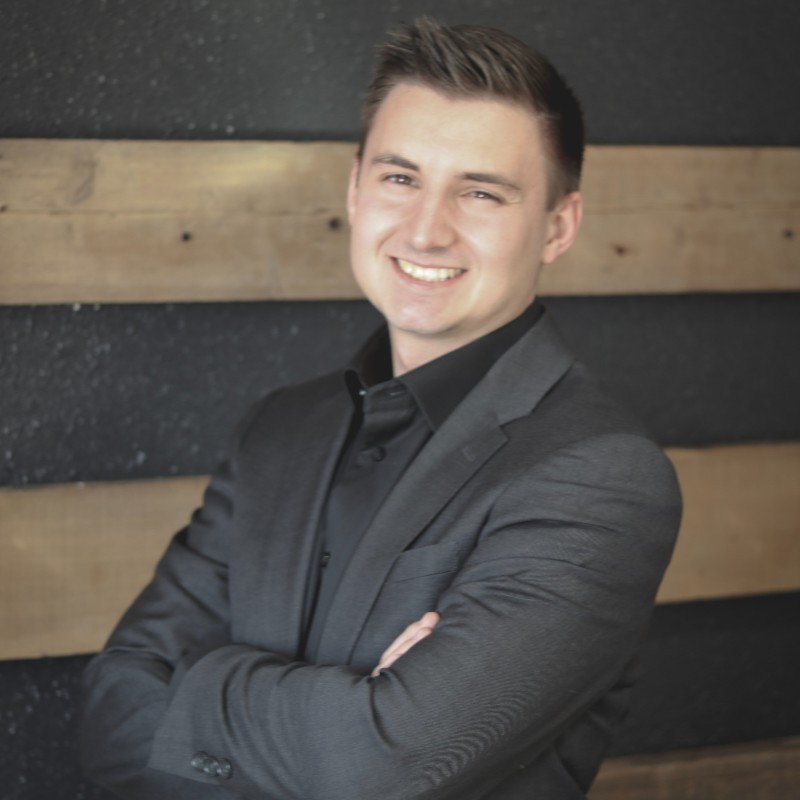
Josiah Ragsdale
Founder, Automotive Lift Services
Josiah has been installing, repairing, and inspecting automotive lifts since he was 18 years old. He founded Automotive Lift Services in 2019 after years of seeing lifts installed wrong, never inspected, and putting technicians at risk. His team now services all 50 states from their Iowa headquarters. Read more
Our Clients Include: