alignment machine for sale Burnsville MN
Shop owners searching for an alignment machine for sale Burnsville MN often come at the question from the wrong direction — they price a machine first and figure out the bay layout later. If your shop does restoration and metal work alongside daily alignment traffic, that order needs to flip. Frame straightening, panel replacement, suspension rebuilds, and unibody corrections put unique demands on floor space, lift selection, and alignment rack placement that a standard tire shop never has to think about. This walkthrough treats the search for an alignment machine for sale Burnsville MN as a safety-first, sequencing problem: what gets installed first, what clearances matter, and how to avoid a costly redo once concrete is cured and conduit is run. Auto Lift Services, based in Ames, Iowa, supports Burnsville shops through vetted local install technicians paired with our own traveling ALS crew — real hands-on installation, not a pallet dropped at your dock.
Get an Alignment Machine Quote →
Why Restoration Shops Need a Different Sequencing Plan
A general repair shop can bolt down an alignment rack almost anywhere with reasonable clearance. A restoration or metal-work shop can’t, because the alignment bay usually shares floor space with frame machines, welding stations, and body jigs that generate vibration, debris, and heat. Before you finalize an alignment machine for sale Burnsville MN purchase, map out which bay will house it permanently and which processes happen nearby. Alignment sensors and targeting cameras are sensitive to vibration and dust; a frame-straightening bench running twenty feet away can throw off calibration if the floor isn’t isolated correctly.
Sequencing also matters because restoration work often means vehicles arrive without functioning suspension geometry — some are on jack stands for weeks during bodywork. That means your alignment bay needs to double as a rolling checkpoint, not just a final-step station. Shops that build this in from day one avoid the common mistake of cramming an alignment rack into leftover space after the metal work area is already finalized.
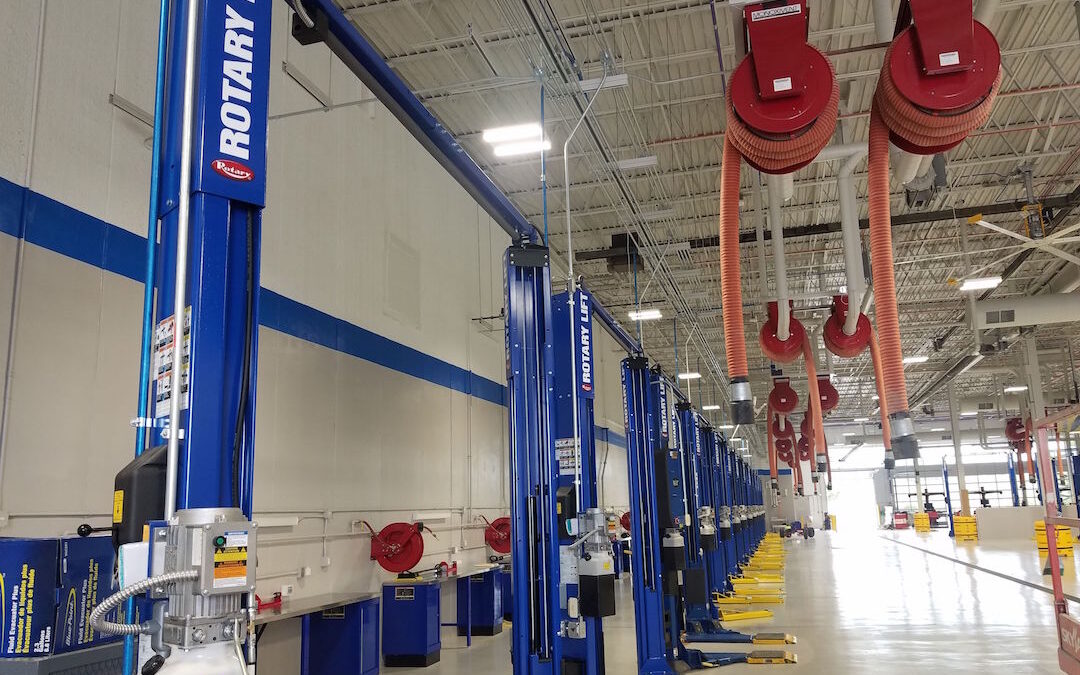
Getting the order right — concrete work, electrical rough-in, lift placement, then alignment rack — prevents rework that can cost more than the machine itself. Our 2-post lift and 4-post lift collections are a good starting point for shops still finalizing bay layout before the alignment equipment goes in.
Step One: Confirm Floor Load and Flatness Before Anything Else
Every safety-first walkthrough starts with the slab. Alignment racks, whether surface-mount or in-ground, require documented floor flatness tolerances and adequate load rating — especially in a restoration shop where heavy steel bodies-in-white or frame sections may be staged nearby. Before you commit to any alignment machine for sale Burnsville MN listing, get the target bay’s slab inspected. Cracked, uneven, or under-spec concrete is the single most common reason alignment installs get delayed or fail post-install calibration checks.
If your building was originally a general service garage, don’t assume the floor was poured with alignment equipment in mind. Frame and metal shops often pour thicker slabs near frame machines and thinner slabs elsewhere — exactly where a rack might land. A core sample or structural review, even a quick one, is worth the delay.
This is also the point to plan for in-ground alignment pits if your shop volume justifies it. In-ground installs need excavation, drainage, and rebar work completed weeks before the machine itself is delivered. Surface-mount racks are more forgiving but still need a verified level pad and anchor points rated for dynamic load, not just static weight.
Skipping this step to “get the machine in faster” is how shops end up re-pouring floors six months later. Sequence the slab work first, always.
Step Two: Sequence Lift Placement Before the Rack Arrives
Lifts and alignment racks interact more than most owners expect. If your restoration bay uses a 2-post or 4-post lift for suspension and frame access, that lift’s footprint, swing arms, and runway placement need to be finalized before you position the alignment rack itself. Reversing this order is a common cause of clearance conflicts — techs unable to fully open doors, swing arms hitting rack rails, or tire changers with no room to maneuver.
For shops doing heavy metal work, a mobile column lift setup can actually solve sequencing headaches better than fixed lifts, since columns can be repositioned as bay use evolves. If you’re not locked into a permanent 2-post or 4-post footprint yet, it’s worth comparing options at our mobile column lifts collection before finalizing concrete anchor points.
Once lift placement is locked, mark out the alignment rack’s turnplates, slip plates, and camera tower positions with tape on the floor before ordering. Walk a technician through a mock alignment procedure in that taped-out space — do they have room to kneel at the wheel, does the camera tower have unobstructed sightlines to targets, can a jack be rolled in from the correct angle? This dry run catches problems no spec sheet will reveal, and it’s far cheaper than moving concrete anchors after installation.
Step Three: Electrical, Air, and Data Rough-In Order
Alignment racks with camera-based or CCD sensor systems need clean, stable power and often a dedicated data line if the system reports to shop management software. In a metal-work shop with welders, plasma cutters, and compressors running on the same panel, electrical noise can interfere with sensor accuracy. Before finalizing any alignment machine for sale Burnsville MN deal, have an electrician review whether the alignment bay needs an isolated circuit separate from welding equipment.
Air lines matter too — turnplates, slip plates, and some lift integrations run on shop air, and undersized compressors or long unsupported air runs cause pressure drops that affect lift and rack performance simultaneously. Rough in electrical and air before the rack physically arrives, tested and verified, not “close enough.”
Sequencing rough-in work ahead of delivery also protects your install timeline. A vetted local technician — whether from our network or a traveling Auto Lift Services crew member — can complete a rack install in a single visit if rough-in is done. If it’s not, that visit turns into two, with idle equipment sitting uncrated in the meantime.
Step Four: Calibration Environment and Vibration Isolation
Restoration shops generate more ambient vibration than a typical tire shop — frame racks, hydraulic presses, and metal fabrication equipment all transmit through slab and structure. Alignment cameras and sensor heads are calibrated to tight tolerances, and repeated vibration exposure can degrade accuracy over time even after a clean initial calibration.
When evaluating an alignment machine for sale Burnsville MN, ask the seller directly about vibration tolerance specs, especially for used or demo units that may already show wear in sensor mounts. A demo model can be an excellent value, but only if its calibration history and physical condition are verified before purchase, not after it’s bolted down.
Isolating the alignment bay with expansion joints, rubber isolation pads under stands, or simply distance from the heaviest metal-work stations reduces long-term recalibration costs. Shops that skip this step often find themselves recalibrating monthly instead of quarterly, adding labor cost that erodes whatever discount they got on the machine itself.
Plan for a technician walkthrough post-install to baseline calibration, then schedule a 90-day check to confirm nothing has drifted once daily metal-work operations resume around the new equipment.
Step Five: Staffing and Workflow Around the New Bay
A safety-first sequencing plan doesn’t end at installation — it extends to how staff actually use the space. Restoration shops often rotate technicians between metal work and alignment duty, which means the alignment bay needs clear, marked safety zones separate from grinding, welding, and cutting stations. Falling sparks, dust, or debris near an alignment camera tower isn’t just an accuracy problem, it’s a safety and fire risk.
Before you finalize any alignment machine for sale Burnsville MN purchase, walk your team through the planned workflow: how vehicles move from teardown to metal work to reassembly to alignment, and where each stage’s tools and stands live. Bottlenecks usually show up on paper before they show up on the shop floor — catch them there.
Train staff on lift-to-rack handoff procedures specifically. A vehicle coming off a 2-post lift after frame work needs a clear, marked path to the alignment bay with no crossing traffic from welding stations. This is also a good time to confirm your tire and balancing equipment is positioned logically in the same flow, since most restoration and alignment work ends with a final tire service step.
Auto Lift Services can help plan this workflow as part of install, drawing on years of layouts we’ve built for shops combining metal work with alignment services nationwide.
Working With Auto Lift Services in Burnsville
Auto Lift Services doesn’t operate a physical branch in Burnsville, but we deliver genuine local install and service through two channels: a nationwide network of 1099 subcontractor technicians we personally train, vet, and support, and — for more complex or safety-sensitive jobs like alignment rack installs in a restoration shop — an Iowa-based ALS technician who flies out to work alongside the local tech on-site. That means your alignment machine for sale Burnsville MN search doesn’t end at “who can ship it here,” it ends at “who can install it correctly, calibrate it properly, and sequence it around metal-work operations without cutting corners.”
We quote alignment racks — new, used, and demo units — alongside tire changers, balancers, and the lifts that anchor your bay layout. If you’re still finalizing whether a 2-post, 4-post, or mobile column setup fits your restoration workflow best, our team can walk through floor plans before you commit to concrete anchor points.
Because we distribute parts and equipment for every major lift and alignment brand, we can also source demo or lightly used alignment machines when budget is a factor, without sacrificing the calibration documentation a restoration shop depends on for consistent, safe results.
About the Author
Josiah Ragsdale is the founder of Auto Lift Services. Based in Ames, Iowa, our team installs, services, and stocks parts for every major lift brand — from a home-garage 4-post through 30,000 lb commercial and 40K+ heavy-duty. Have a question or need a quote? Call 800-674-9302 or email [email protected].