Car Lift For Sale Arlington VA
For a mobile mechanic building a brake-and-rotor route around Arlington, Virginia, the search for a car lift for sale Arlington VA usually starts with the wrong question — “which lift is cheapest?” — when the real question is “which lift will still be earning me money in twenty years?” Rotor swaps, pad jobs, and caliper work are volume businesses. Every minute spent working on a floor jack instead of a lift is a minute you can’t bill. This piece looks at a car lift for sale Arlington VA search through a total-cost-of-ownership lens, using a recent Iowa two-post install as a real-world case study, and lays out what a mobile brake specialist should actually budget for over two decades of use.
Shop Lifts for Brake & Rotor Work →
Why Brake Work Changes the Lift Math
Brake and rotor service is different from general repair in one important way: it’s almost pure labor, done fast, over and over. A mobile mechanic doing eight to twelve brake jobs a week isn’t lifting a car once and leaving it up for a day — the lift cycles constantly, wheels come off, calipers get swung, rotors get pulled and swapped, and the vehicle drops within the hour. That cycle count matters more than almost any other spec when someone is comparing a car lift for sale Arlington VA against a general-purpose unit. A lift built for occasional home use will show wear at the arm pins and locking mechanisms far sooner under this kind of repetition.
It also changes what “convenient” means. Brake techs need quick, symmetric arm access to get at rotors and calipers without fighting frame rails, and they need a lift that locks at a comfortable working height for wheel-off tasks — usually mid-chest, not full overhead. A four-post with drive-on ramps is faster for oil changes but frustrating for brake work because the wheels hang below the ramp surface awkwardly. A two-post with open-center arms, by contrast, lets the wheel spin free and gives full access to the rotor face and caliper bracket from both sides simultaneously.
This is also why symmetric versus asymmetric arm geometry matters for a mobile operation that services a mix of sedans, crossovers, and light trucks in one day. The wrong geometry costs you setup minutes on every single vehicle, and over a twenty-year run, those minutes compound into real dollars.
The Iowa Case Study: A Two-Post Bought for Volume, Not Just Space
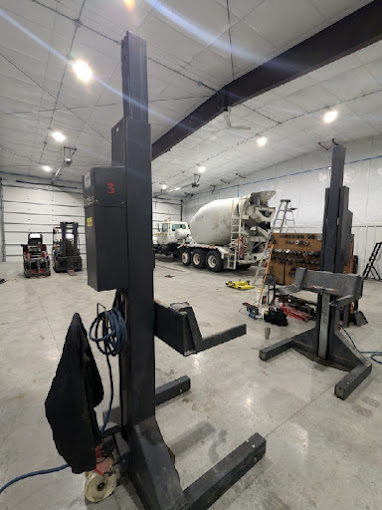
A recent installation we completed in central Iowa is a useful reference point, even for a shop researching a car lift for sale Arlington VA a thousand miles away. The customer was outfitting a 30×40 pole building shop with 12-foot sidewalls and concrete flooring — similar in scale to what many independent brake specialists work out of near Arlington. The requirement was straightforward: lift a passenger vehicle under 7,000 pounds, be able to store one car up top while working under a second, and do it reliably without babysitting the equipment.
We walked the buyer through two-post options sized to the building’s ceiling clearance and floor rating, rather than defaulting to the biggest lift available. That’s the detail that gets missed in most car lift for sale Arlington VA searches — buyers price-shop capacity first and clearance second, then discover during install that their 12-foot walls won’t clear a tall two-post at full rise. The Iowa buyer avoided that by getting ceiling height and lift height matched before ordering, not after.
The lesson transfers directly: a mobile brake mechanic evaluating a shop or storage bay in the Arlington area should measure vertical clearance and floor thickness before falling in love with a lift’s price tag.
Twenty-Year Total Cost of Ownership, Broken Down
Sticker price is a small fraction of what a lift actually costs over two decades. When a mobile mechanic runs a real car lift for sale Arlington VA comparison, four categories dominate the twenty-year number: purchase and install, wear parts, hydraulic service, and downtime.
Purchase and professional install is the one-time cost everyone focuses on — but a poorly anchored or misaligned lift creates recurring problems for years afterward, so paying for correct anchoring into rated concrete up front is cheaper than fighting alignment issues later. Wear parts — cables, pulleys, arm pins, locking pawls, and the sliding blocks that let carriages ride the columns smoothly — are the steady drip. One recent request we fielded was from an Arlington-area shop owner needing new sliding blocks installed on an older AMMCO-brand two-post; that’s a textbook twenty-year maintenance item, not a failure of the lift itself. Budgeting for blocks, cables, and pulleys roughly every five to eight years under heavy brake-shop use keeps a lift running near-new.
Hydraulic service is the next bucket. Cylinders leak eventually, especially on lifts cycled dozens of times a week. We’ve handled jobs where a shop simply bought a second lift after a cylinder failure rather than wait on repair — but for most operations, replacing hydraulic cylinders on the original lift costs a fraction of a full replacement and keeps a familiar, already-anchored lift in service. Finally, downtime — the days a lift is out of service — is the hidden cost mobile mechanics feel hardest, since a broken lift during a busy brake week means turned-away appointments.
Two-Post vs. Mobile Column: Which Fits a Brake Route
Most people typing “car lift for sale Arlington VA” into a search bar are picturing a fixed two-post in a single garage bay, but mobile mechanics running a brake specialty should weigh mobile column lifts as well, especially if the work happens across more than one bay or occasionally at a client’s property. Mobile columns let you lift a vehicle without a permanent anchor point, which matters if the space is leased or shared.
For a dedicated brake bay, though, a fixed two-post generally wins on cost per cycle. It’s simpler mechanically, has fewer components to maintain across two decades, and gives the fastest setup time between vehicles — critical when you’re billing by the job, not the hour. A four-post is worth considering only if the same bay doubles as long-term vehicle storage between service work, since drive-on ramps make parking and pulling cars in and out faster than a two-post’s swing arms.
Weight capacity should be sized to the heaviest vehicle you regularly service plus a margin — a 7,000 to 10,000 lb two-post covers the vast majority of passenger cars, crossovers, and light trucks a brake specialist sees, without paying for capacity you’ll rarely use. Compare options directly on our two-post lift collection or the mobile column lineup if flexibility matters more than a permanent anchor.
What Local Installation Actually Looks Like Near Arlington
Auto Lift Services is based in Ames, Iowa, but we install and service lifts across the country, including the Arlington, Virginia area, through a network of vetted 1099 subcontractor technicians we’ve trained and supported directly. For many installs — especially two-post jobs requiring precise anchoring and alignment — we also fly one of our own Iowa-based technicians out to work on-site alongside the local tech. That combination means a mobile mechanic searching for a car lift for sale Arlington VA gets both boots-on-the-ground local labor and the direct oversight of the team that built the install process in the first place.
We don’t operate a physical storefront in Arlington, and we’re upfront about that. What we provide instead is coordinated, quality-controlled installation delivered locally — the anchoring done to spec, the alignment checked twice, and a technician who can answer questions on-site rather than over a shipping label. For a piece of equipment you’ll depend on for twenty years of daily brake work, that install quality matters more than whether the company has a local address.
Recent Virginia-area requests we’ve supported include cylinder replacement on a leaking two-post, sliding block installation on an older AMMCO unit, and full four-post repair — all evidence that ongoing service, not just delivery, is part of owning a lift long-term.
Anchoring, Concrete, and the Details That Determine Lift Life
A twenty-year total cost of ownership calculation is only as good as the install underneath it. Concrete thickness and cure time determine whether anchors hold under the repeated stress of a brake shop’s cycle count, and this is where a rushed or DIY install creates expensive problems years down the line. Before finalizing any car lift for sale Arlington VA purchase, confirm the slab meets the manufacturer’s minimum thickness and PSI rating for the lift’s capacity — older commercial buildings and converted garages in the Arlington area sometimes fall short, especially in additions or outbuildings poured for lighter use.
Ceiling clearance is the second detail that trips up mobile mechanics setting up a dedicated bay. As the Iowa case study showed, matching lift height to available clearance before ordering avoids a costly reshuffle after delivery. Measure from finished floor to the lowest overhead obstruction — not just the roofline — since ductwork, lighting, and door tracks often sit lower than expected.
Finally, plan for arm reach relative to bay width; brake techs need enough side clearance to swing a wheel off and set it aside without bumping a neighboring vehicle or wall. These details don’t show up in a price comparison, but they’re exactly what separates a lift that serves a shop reliably for two decades from one that becomes a recurring headache. Our parts lookup page can help identify replacement components if you’re maintaining an existing lift rather than buying new.
Building a Realistic Twenty-Year Budget
Pulling it together, a mobile brake mechanic evaluating a car lift for sale Arlington VA should budget in four phases rather than fixating on one number. Phase one is acquisition and professional installation, sized to actual vehicle weights and bay clearance rather than the biggest capacity available. Phase two is a maintenance reserve for wear items — sliding blocks, cables, pulleys, and locking mechanisms — expected roughly every five to eight years under daily brake-shop cycling. Phase three is hydraulic service, since cylinders are a near-certainty to need attention at least once across a twenty-year span, and budgeting for repair rather than full replacement usually saves money. Phase four is a downtime buffer — even a well-maintained lift needs occasional service, and a mobile mechanic’s schedule should have enough flexibility to absorb a few days of reduced capacity without losing clients.
Treat these four phases as a single number, not four surprises, and the true cost of ownership becomes predictable rather than reactive. A lift purchased with clearance, capacity, and install quality matched to real brake-shop conditions from day one will consistently beat a cheaper unit that needs correction later. That’s the core difference between shopping price and shopping total cost — and it’s the lens worth applying to any car lift for sale Arlington VA before signing on the dotted line.
About the Author
Josiah Ragsdale is the founder of Auto Lift Services. Based in Ames, Iowa, our team installs, services, and stocks parts for every major lift brand — from a home-garage 4-post through 30,000 lb commercial and 40K+ heavy-duty. Have a question or need a quote? Call 800-674-9302 or email [email protected].
Car Lift For Sale Arlington VA | Hydraulic Tubing Techniques
Failing to properly secure fittings, over-tightening connections, or neglecting to inspect for potential issues after installation can all lead to problems that could have been easily avoided with a little more attention to detail. These types of errors are among the...