Car Lift For Sale Buckeye AZ
When the owner of a growing RV and trailer service shop in Buckeye, Arizona started shopping for a car lift for sale Buckeye AZ operators could actually rely on for heavy motorhomes, fifth-wheels, and seasonal storage turnover, the search turned into a crash course in freight logistics, dock access, and forklift staging most passenger-vehicle shops never think about. This is the story of that first year — from the initial quote through the freight delivery, the install, and the first service call — told so other RV and trailer shops in the West Valley can skip the expensive lessons. Buckeye’s mix of snowbird storage demand, trailer prep work, and heavy-duty towing rigs means a shop lift has to handle weight and geometry that a typical passenger bay never sees, and that changes everything from the crate size to the crew you need on the dock the day it arrives.
Shop Heavy-Duty Lifts for RV & Trailer Shops →
Why an RV Shop’s Search Looks Different From a Typical Buyer
Most people searching for a car lift for sale Buckeye AZ are picturing a 9,000 to 10,000 lb two-post going into a two-car garage. An RV and trailer service shop is a different animal entirely. The vehicles rolling through the door are longer, heavier, and often asymmetrical once axles and tanks are loaded, which immediately narrows the field to heavier-capacity two-post and four-post platforms, or in some cases mobile column sets that can straddle a chassis without needing a fixed bay footprint. Shops that also handle seasonal storage — pulling snowbird trailers up on wheels or stands for the summer, then dropping them back down in the fall — need a lift that can cycle reliably hundreds of times a year without drifting out of level, since an unlevel lift on a 15,000 lb coach is a very different risk than on a sedan.
The other difference is throughput. A car lift for sale Buckeye AZ shop owner is usually thinking about one or two bays running efficiently all day, while an RV and trailer operation is often coordinating multiple lifts, staging areas for units waiting on service, and a yard full of storage customers who want quick turnaround. That means the buying decision isn’t just about the lift itself — it’s about how the lift fits into a bigger logistics puzzle involving freight delivery, unloading equipment, and floor layout.
The Freight Reality Nobody Mentions Up Front
The first surprise for many shops shopping a car lift for sale Buckeye AZ listing is the freight itself. A heavy-duty two-post or four-post lift rated for RV and trailer work doesn’t arrive in a box you carry inside. It ships on a flatbed or LTL freight truck, often broken into multiple crates — columns, carriages, hydraulic units, and cable or chain kits packaged separately — with total weight easily running into the several-thousand-pound range per unit. Buckeye’s industrial corridors along I-10 make freight access relatively straightforward compared to more residential parts of the Valley, but the shop still needs a dock or a way to get a forklift to the trailer, because most freight carriers will not hand-unload equipment this heavy.
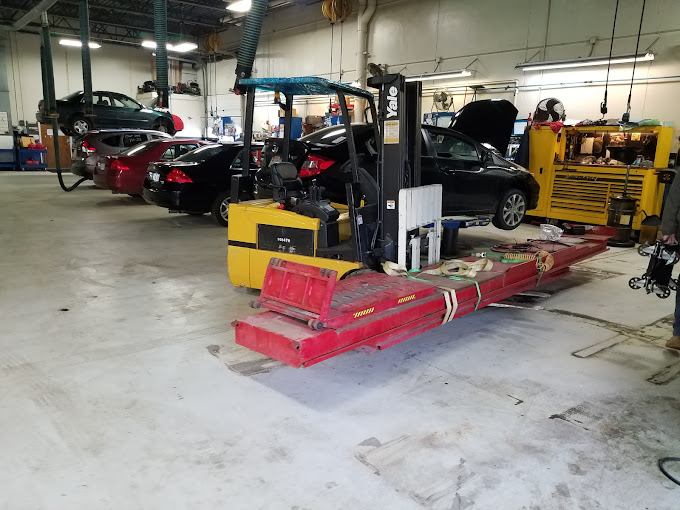
This is where a lot of first-time buyers get caught off guard. If your facility doesn’t have a loading dock, you need either a rough-terrain forklift capable of lifting several thousand pounds off a flatbed, or you need to arrange liftgate delivery in advance — and liftgate service has its own weight limits that heavy lift crates can exceed. Shops that skip this planning step sometimes end up with a freight truck idling in the lot while everyone scrambles to find a forklift, which adds detention fees on top of the freight cost. The smarter approach is to confirm crate weights and dimensions before the truck ever leaves the distribution center, and to have a forklift and an experienced operator scheduled for the exact delivery window.
Staging the Yard Before the Truck Ever Shows Up
For an RV and trailer shop, yard space is already tight between storage units and vehicles waiting for service, so staging matters as much as the freight itself. Before ordering, walk the exact path the crates will travel from the drop point to the install bay. Overhead doors, gate widths, and turning radius for a loaded forklift all need to be measured — a crate that clears a 10-foot door with inches to spare on paper can be a different story once a forklift operator is trying to thread it past parked trailers.
Shops that handle this well usually clear a dedicated unloading zone the morning of delivery, move any storage units blocking the path, and have a second employee on hand to spot the forklift operator. It sounds like overkill until you’ve watched a column crate clip a doorframe. Buckeye’s summer heat is also a factor — scheduling freight delivery for early morning avoids both the worst heat for the crew and the afternoon thunderstorm risk that can delay a flatbed sitting exposed in the lot.
Choosing Capacity for Seasonal Storage Cycling
Seasonal storage work puts a different kind of stress on a lift than daily service bays. If the plan is to lift trailers and coaches up for extended storage periods and set them back down each season, the lift needs to be rated well above the actual gross weight of the heaviest unit likely to come through, with margin for uneven load distribution from partially filled tanks or shifted cargo. Shops evaluating a car lift for sale Buckeye AZ dealer or distributor is offering should ask specifically about duty cycle ratings, not just peak capacity, since a lift built for occasional heavy lifts isn’t necessarily built for constant seasonal cycling.
Two-post configurations in the 9,000 to 15,000 lb range cover a lot of trailer and lighter coach work, while four-post platforms and mobile column sets tend to make more sense for full motorhomes where a drive-on deck simplifies loading. Some shops run a mixed fleet — a heavier two-post for chassis and undercarriage work, plus a four-post or set of columns dedicated purely to storage cycling — which spreads wear and reduces bottlenecks during the fall and spring rush when everyone wants their unit up or down at once.
The Install: What Actually Happens On Site
Once the crates clear the yard and land in the bay, installation for heavy-duty two-post and four-post lifts follows a fairly consistent sequence: anchor layout and concrete verification, column setup and plumb-checking, carriage and cable or chain installation, hydraulic hookup, and a full cycle test under load before the lift is cleared for daily use. For RV-rated capacities, anchor spacing and concrete thickness get scrutinized closely, since Buckeye’s slab specifications vary a lot between older industrial buildings and newer construction, and a slab that’s fine for a passenger-vehicle lift may need reinforcement or additional anchoring for a heavy-duty unit.
Auto Lift Services is based in Ames, Iowa, and we’re upfront that we don’t run a physical branch office in Buckeye. What we do run is a nationwide install and service model built two ways: a network of vetted 1099 subcontractor technicians we train and support in-market, and for many jobs, one of our own Iowa-based techs flying out to work the install alongside that local tech. For a heavy-duty RV shop lift, that combination matters — the local tech knows the concrete and the building, and our tech knows the specific hydraulic and cable geometry of the unit going in. If you’re weighing a car lift for sale Buckeye AZ listing against the install work it’ll take, ask exactly who’s doing the anchoring and the load test, and how experienced they are with the tonnage you’re buying.
The First Service Call: What Breaks In and What Doesn’t
Every heavy-duty lift needs a break-in period, and shops running seasonal storage cycles tend to find issues faster than shops using a lift occasionally, simply because of the repetition. The most common first-year service calls involve cable stretch and re-tensioning on two-post units, hydraulic seal seating, and column alignment drift if the slab settles slightly under repeated heavy loads. None of this is unusual — it’s why a proper first 30-day check and a scheduled follow-up inspection matter more for RV-capacity lifts than for light-duty ones.
A shop that bought its lift with service access already lined up avoids the scramble of hunting for a qualified tech mid-season when a trailer is stuck mid-air. Our parts lookup and service scheduling resources cover cable kits, hydraulic components, and safety mechanisms across major brands, and our 4-post lift and mobile column collections give a side-by-side sense of which platform fits a storage-heavy operation before you commit. Buckeye shops considering a car lift for sale Buckeye AZ purchase should treat that first service call as part of the deal from day one, not an afterthought once something squeaks.
Lessons for the Next Buyer
Looking back at that first year, the RV and trailer shop’s biggest takeaways weren’t about the lift’s price tag — they were about logistics. Confirming freight class and crate weight before the truck left the warehouse. Having a forklift and operator scheduled, not just hoped for. Clearing a real path through the yard instead of assuming the crew could figure it out on the fly. And treating installation and that first service visit as a package, with a clear answer on who shows up if something needs adjusting six weeks in.
For any Buckeye shop weighing a car lift for sale Buckeye AZ option against the full picture of freight, unloading, install, and service, the equipment itself is often the easy part. The planning around it is what determines whether year one goes smoothly or turns into a string of avoidable delays. Shops that get the logistics right up front spend that first year running trailers up and down instead of chasing freight trucks and forklift rentals.
About the Author
Josiah Ragsdale is the founder of Auto Lift Services. Based in Ames, Iowa, our team installs, services, and stocks parts for every major lift brand — from a home-garage 4-post through 30,000 lb commercial and 40K+ heavy-duty. Have a question or need a quote? Call 800-674-9302 or email [email protected].
Car Lift For Sale Buckeye AZ | Accessing a Vehicle’s Underbody
A four-post lift can provide excellent storage options, stability, and ease of use for wheel alignment and other maintenance tasks, making it a worthwhile investment for many garages and workshops. However, its size and limited accessibility may make it less ideal for...