
Car Lift For Sale Chattanooga TN
Searching for a car lift for sale Chattanooga TN usually starts with a simple question — “which brand?” — but for a collector who stores multiple vehicles and only touches the state inspection lane once a year, the real question is different: overhead two-post, or baseplate? This is the story of how one Chattanooga-area collector spent his first year of ownership figuring that out, from the week the lift went in through the first annual service call. If you’re weighing a car lift for sale Chattanooga TN dealers and installers are quoting you, this angle — built around collector storage, low-frequency use, and inspection-day reliability — matters more than horsepower ratings or paint color.
The Setup: A Garage Full of Cars, One Lift Decision Left
Our collector had spent a decade filling a pole barn outside Chattanooga with project cars — a few daily-capable, most stored for months at a time. He’d been getting by with jack stands and a borrowed neighbor’s lift for the annual state inspection, but that arrangement finally fell apart when the neighbor sold his shop equipment. He needed his own solution, and that’s when he started searching for a car lift for sale Chattanooga TN shops could actually install correctly in a converted barn with 11-foot ceilings.
The ceiling height was the first constraint that mattered. A two-post lift comes in two structural families: overhead (the crossbar/cable system sits above the vehicle, tying the posts together near the top) and baseplate (each post is anchored independently through a floor plate, with no overhead structure). Overhead lifts are generally the stronger, more common commercial configuration, but they need real clearance — often 12 feet or more depending on capacity and column height. Baseplate lifts sacrifice a little of that overhead tie-bar rigidity in exchange for fitting into shorter buildings, which made them the only realistic option for his barn.
He also had five vehicles in rotation but only needed to move one at a time to the inspection lane. That ruled out a four-post storage rack as the primary lift and kept the conversation focused on a single, well-built two-post unit rated comfortably above his heaviest vehicle’s weight.
This is where a lot of collector buyers get stuck: matching lift geometry to a building that wasn’t designed for a lift in the first place.
Why Overhead vs. Baseplate Became the Whole Decision
Once ceiling height entered the conversation, everything else followed from it. An overhead configuration ties the two posts together at the top, which distributes load more evenly and is the standard choice in most commercial shops with adequate ceiling height. For a collector with an open shop and 14+ feet of clearance, overhead is usually the safer, longer-lasting choice, and it’s what we’d recommend by default to anyone shopping a car lift for sale Chattanooga TN buyers plan to keep for twenty years.
But his barn had exposed trusses at 11 feet, and an overhead lift’s crossbar plus the vehicle’s height would have left him inches from disaster on taller trucks. So the decision moved to baseplate. Baseplate two-post lifts anchor each column independently into the slab, and because there’s no overhead bar, they work in shorter buildings and don’t obstruct crane access or storage racks above. The tradeoff is that baseplate models demand a flatter, more carefully leveled floor and a slab thickness and cure time that can’t be shortcut — anything less and you get post drift over time, which is exactly the kind of problem that fails a lift’s own safety inspection down the road.
We walked him through both configurations with actual clearance measurements from his barn before quoting anything. That’s the step most online listings skip: a car lift for sale Chattanooga TN dealer should be measuring your building, not just emailing a spec sheet.
He went baseplate, rated with real margin above his heaviest vehicle, and never looked back.
Install Week: What Actually Happened in the Barn
Once the baseplate lift was selected, install week came down to slab prep and anchoring, not exotic hydraulics. Our crew reviewed his existing slab thickness and confirmed it met the minimum for the anchor bolts specified by the manufacturer — a step that gets skipped constantly on secondhand and private-party lift installs, and one reason we always insist on it even when the buyer wants to save money doing other parts of the job themselves.
Because Auto Lift Services is based in Ames, Iowa, we don’t pretend to run a storefront in Chattanooga. Instead, this install was handled by one of our vetted 1099 subcontractor technicians in the Chattanooga market, working from our install specs and quality checklist, with one of our own Iowa-based techs flown in to work alongside him for the day. That combination — local hands, ALS oversight on-site — is how we cover installs across Tennessee without a brick-and-mortar branch pretending to exist where it doesn’t.
The posts went in plumb, the hydraulic lines were routed and bled, and the arms were set for his mix of low sports cars and taller trucks. We spent extra time on adjustable arm restraints since his fleet varied so much in wheelbase and pickup point height — a detail collectors with mixed garages often underestimate until the first car won’t sit level on the pads.
Total install time ran a full day, most of it slab verification and anchor torque rather than the lift itself. He was told upfront that rushing anchor cure time is exactly how baseplate lifts develop the post-drift issues that show up eighteen months later as a failed safety check — a story we hear often enough from other collectors that we build the extra hours into every quote rather than skip them.
First Inspection Day: The Lift’s First Real Test
Eleven months after install, inspection season arrived, and this is where a collector’s use pattern diverges sharply from a working shop’s. His lift had sat mostly idle, raised maybe a dozen times all year, mostly for undercarriage photos and oil changes rather than heavy work. That low-cycle pattern is good for the hydraulics but can be tough on seals if a lift sits raised for long stretches without movement — grease and hydraulic fluid don’t stay evenly distributed the way they do with daily cycling.
Before his first inspection, he ran the lift through a handful of empty cycles to redistribute fluid and check for drift, then loaded his newest acquisition — the vehicle he was least confident in — for a dry run the week before the actual appointment. That dry run mattered: he caught a slightly slow arm swing on one side, which turned out to be nothing more than a sticky pivot needing grease, not a hydraulic problem. Anyone shopping a car lift for sale Chattanooga TN sellers list “as-is” should budget for exactly this kind of pre-season check, because a slow arm at inspection time, discovered for the first time under pressure, turns a five-minute fix into a missed appointment.
Inspection day itself went smoothly. The car came up level, held position, and passed the state’s under-vehicle checks without incident. For a lift used this lightly, the real achievement wasn’t the lift performing — it was the owner having caught the small stuff a week early instead of finding out live.
The First Service Call: What a Leaky Cylinder Really Means
Roughly nine months after inspection, he noticed a faint hydraulic weep near one cylinder — not dramatic, just a thin film after the lift sat raised overnight. He called us the same week, and this is a case where hesitation is the wrong instinct. A 12,000-lb two-post lift with a leaking hydraulic cylinder is not automatically unsafe, but it is not something to keep raising a vehicle on until someone’s looked it over. Slow leaks can mean a worn seal, a scored cylinder wall, or occasionally a loose fitting — three very different repairs with three very different price tiers, and only an on-site inspection tells you which one you’ve got.
We scheduled a technician visit rather than guessing over the phone. The visit confirmed a seal-level leak rather than anything structural, which meant a straightforward reseal rather than a cylinder replacement — the difference between a half-day repair and a multi-day one. We also used the visit to check cable tension and post anchoring, standard practice on any service call for a lift approaching its one-year mark, since minor settling is normal in the first twelve months and easy to correct if caught early.
He now keeps a simple log of raised hours and any unusual sounds or drips, which turns next year’s inspection prep into a five-minute review instead of a surprise.
What Collectors Get Wrong Shopping a Car Lift for Sale Chattanooga TN
The most common mistake among collector buyers is choosing lift capacity based on their current fleet rather than what they might store next. Our Chattanooga-area buyer sized for his heaviest current truck with only modest margin, which worked, but it also meant any future acquisition needed a capacity check before it touched the pads. We generally recommend collectors buy at least one weight class above their current heaviest vehicle specifically because garages like his rarely stay static for long.
The second mistake is treating overhead and baseplate as interchangeable when shopping listings. Used-lift ads and even some new listings for a car lift for sale Chattanooga TN rarely specify configuration clearly, and the difference genuinely changes what building you need. A lift that’s a great deal on paper is no deal at all if your ceiling can’t clear the crossbar.
The third mistake is skipping annual maintenance because a lift “only gets used a little.” Low-cycle use doesn’t mean zero maintenance — if anything, seals and grease points need more attention when a lift sits idle for weeks between uses, since static seals are more prone to slow leaks than seals that see regular movement.
Finally, buyers underestimate install complexity on older buildings — barns, pole sheds, converted garages — where slab thickness and ceiling height were never designed around lift equipment. Getting actual measurements before ordering saves the return-shipping headache entirely.
For parts, cables, or seal kits related to any of this, our parts lookup page covers most major brands sold or serviced in the Chattanooga area.
Choosing the Right Configuration for Your Own Garage
If you’re comparing a car lift for sale Chattanooga TN and trying to decide between overhead and baseplate yourself, start with a tape measure, not a spec sheet. Measure clear ceiling height at the exact spot the lift will stand, not just the tallest point in the building — trusses, ductwork, and light fixtures all eat into usable clearance. If you’re above roughly 12 feet clear with no obstructions, overhead is almost always the stronger long-term choice for a collector garage. Below that, baseplate becomes the practical answer, with the tradeoff that your slab needs to be in good condition and properly cured before anchoring.
Second, size for your worst-case vehicle weight, not your average one, and add a margin for whatever you might buy next. Third, decide honestly how often the lift will cycle. A lift raised daily in a working shop and a lift raised a dozen times a year in a collector’s barn age differently, and that should shape your maintenance schedule, not just your purchase decision.
Our related guide on choosing lift capacity and configuration for home and collector garages goes deeper into weight-class math if you want the numbers behind these recommendations. And if you’ve already got a lift showing early warning signs — slow arms, faint weeps, uneven leveling — that’s worth a service call before your next inspection date, not after.
Whether you’re outfitting a barn full of collector cars or adding a single lift to a home garage, our Ames, Iowa-based team supports installs and service across Tennessee through vetted local technicians paired with our own on-site oversight, so you get real local hands without us pretending to run a shop that isn’t there.
About the Author
Josiah Ragsdale is the founder of Auto Lift Services. Based in Ames, Iowa, our team installs, services, and stocks parts for every major lift brand — from a home-garage 4-post through 30,000 lb commercial and 40K+ heavy-duty. Have a question or need a quote? Call 800-674-9302 or email [email protected].
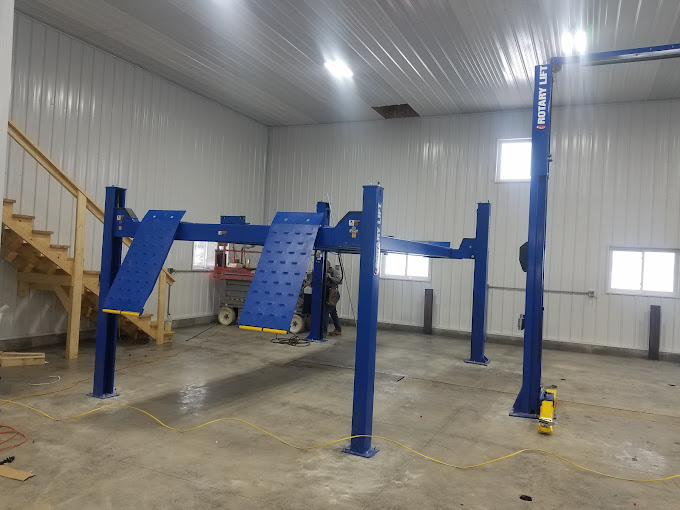
Car Lift For Sale Chattanooga TN | Basic System Safety
When it comes to hydraulic systems, the retraction process of the piston is a crucial aspect that ensures the system is ready for the next operational cycle. As important as the outward motion of the piston is, providing an efficient and clear path for the hydraulic...