
Car Lift For Sale Goodyear AZ
For a European-marque specialty shop searching for a car lift for sale Goodyear AZ technicians can trust for transmission service, the biggest risk isn’t the sticker price — it’s the warranty fine print nobody reads until a cylinder fails or a bearing pack seizes mid-service. Goodyear’s independent import shops handle enough DSG rebuilds, Audi Multitronic swaps, and BMW ZF drops that a lift isn’t a convenience — it’s a production tool that has to hold a loaded drivetrain jack overnight without drama. Yet we consistently see shops in the West Valley buy a car lift for sale Goodyear AZ based purely on capacity and price, only to discover the warranty they thought they had doesn’t cover the failure mode they actually experience. This piece busts the most common myths around lift warranties and claim workflows so your next purchase protects the shop, not just the invoice.
Myth #1: “Warranty Length Is the Only Number That Matters”
Shops shopping for a car lift for sale Goodyear AZ often compare warranty years the way they’d compare tire tread ratings — bigger number wins. That’s backwards for a transmission-service bay. A 5-year warranty on the structural frame means little if the hydraulic cylinder, the part most stressed by holding a loaded drivetrain during a Multitronic or DSG teardown, is only covered for one year, or worse, covered only for “manufacturing defects” and not wear from extended dwell time under load. European transmission work frequently means a car sits on the lift far longer than a brake job or oil change — sometimes overnight while parts ship or a rebuild kit arrives. That extended, sustained loading is exactly the scenario cheap warranty language tries to exclude.
Before you sign, ask specifically: does the warranty cover cylinder drift, arm restraint pin wear, and hydraulic seal failure under extended static load, or only catastrophic frame defects? Get the answer in writing, not verbally from a sales rep. A shop doing three or four transmission jobs a week puts different stress on a lift than a general repair bay doing quick in-and-out work, and the warranty should be evaluated against your actual duty cycle, not the manufacturer’s generic marketing copy.
We’ve walked Arizona shops through this exact comparison — see our parts and lookup resources for OEM cylinder and seal specs before you commit to a brand.
Myth #2: “Any Certified Installer Can File My Claim”
The second myth costs shops the most time. Many assume that because a lift arrived “professionally installed,” any technician who touches it afterward can initiate a warranty claim if something goes wrong. In practice, most manufacturers require the claim to originate from the original selling/installing dealer of record, with serial number, install date, and a documented service history attached. If your shop bought a car lift for sale Goodyear AZ through a marketplace listing or a reseller with no ongoing service relationship, you may find yourself unable to open a claim at all — or stuck in a multi-week email chain trying to prove where and when the unit was installed.
This is precisely why the install partner matters as much as the lift brand. Auto Lift Services is based in Ames, Iowa, but we deliver real local install and service in the Goodyear market two ways: through vetted 1099 subcontractor technicians we personally train and support, and — for more complex two-post and four-post transmission-bay installs — by flying one of our own Iowa techs to the job site to work alongside the local installer. That means your paperwork, serial records, and claim history live with a company that answers the phone, not a listing that vanished after checkout.
When a shop calls us mid-claim asking “who installed this and when,” we already have the answer on file. That single detail has saved import specialty shops weeks of downtime during exactly the kind of high-load transmission work that triggers warranty disputes in the first place.
Myth #3: “Warranty Claims Are Free If the Part Is Covered”
Parts coverage and labor coverage are not the same thing, and this gap catches shops off guard constantly. A manufacturer might replace a failed hydraulic cylinder at no charge under warranty, but the labor to remove the old one, ship the replacement, and reinstall it — often requiring a lift service call — can run into real money if your shop has no service agreement in place. For a European-marque shop mid-transmission-job with a car stuck on a dead lift, that gap isn’t academic; it’s lost bay time and a customer’s vehicle sitting immobile.
Read the warranty’s labor clause before you buy any car lift for sale Goodyear AZ. Ask whether on-site labor is included, partially covered, or fully billable, and for how many years. Ask whether the manufacturer dispatches its own techs or relies on regional installers — and how far the nearest one is from your bay. This is where a distributor with actual boots-on-the-ground capability in Arizona differentiates itself from a drop-ship seller who disappears after delivery.
Myth #4: “Installation Doesn’t Affect the Warranty”
This is arguably the most damaging myth. Nearly every major lift manufacturer’s warranty is conditional on proper anchoring, correct concrete thickness, and installation per spec — and most warranties are voided outright if a lift is installed by an unlicensed or undocumented party. Shops that buy a lift and have “whoever’s around” bolt it down are frequently shocked, months later, to learn a claim was denied because the anchoring documentation didn’t meet the manufacturer’s slab-thickness requirement.
For transmission-service bays specifically, anchoring quality matters more, not less. A loaded drivetrain jack under a raised vehicle multiplies point-load stress on the anchors compared to routine service. If your slab wasn’t tested and documented at install time, you have no way to prove compliance when a claim is filed. This is a case where paying for proper install documentation up front is cheaper than any warranty dispute later.
Myth #5: “Two-Post Lifts Are Automatically Wrong for Transmission Work”
Some shops assume only four-post lifts are viable for transmission service because of stability concerns, and that belief alone pushes them toward oversized, overpriced equipment they don’t need. In reality, a properly rated two-post lift with symmetric or asymmetric arms — the same class we regularly install for Arizona shops in the 9,000 to 12,000 lb range with 25-foot ceiling clearance — handles transmission drops safely when paired with the correct transmission jack and adapter set. The warranty question isn’t post count; it’s whether the arm restraint system and cylinder are rated for the sustained, uneven loading a drivetrain removal creates. Don’t let a myth about lift geometry drive you toward unnecessary capacity or cost when the real variable is warranty coverage on load-bearing components under exactly your use case.
Myth #6: “Inspection Isn’t Part of the Warranty Conversation”
Many shop owners treat annual inspection as a separate line item from warranty coverage, unrelated until something breaks. That’s incorrect — most manufacturers require documented annual inspection to keep a warranty valid at all, and a lapsed inspection schedule is one of the most common reasons claims get denied outright. We’ve seen fleets with well over a hundred lifts across multiple sites lose coverage on individual units simply because inspection paperwork wasn’t centrally tracked. For a single-location European specialty shop, the fix is simpler: put your car lift for sale Goodyear AZ purchase on a documented annual inspection cadence from day one, and keep the records with your seller, not in a filing drawer that gets lost in an ownership transition.
Auto Lift Services performs documented inspections through the same local-tech-plus-Iowa-support model we use for installs, so your inspection history and your warranty claim history live in one place — which is exactly what a manufacturer wants to see when a claim comes in.
Myth #7: “All Lift Dealers Handle Claims the Same Way”
The final myth is the one that ties everything together: the assumption that the claim process is standardized across dealers, so the seller doesn’t matter once the sale closes. It matters enormously. Some sellers are pure drop-shippers with no service capacity; if a cylinder fails during a transmission job six months in, you’re emailing a call center and waiting. Others, including our team, maintain an actual claim workflow — documented serial numbers, install records, inspection history, and a direct line to the technician who can diagnose whether the issue is warrantable before a truck ever rolls.
Before buying any car lift for sale Goodyear AZ, ask the seller to walk you through their exact claim process step by step: who you call, what documentation they need, and how fast a local tech can get to your bay. If they can’t answer clearly, that’s your answer about how the relationship will go post-sale. Compare that experience against our two-post lift lineup and our four-post options, both backed by documented install and inspection support built specifically for shops running heavy, extended-load work like transmission service.
About the Author
Josiah Ragsdale is the founder of Auto Lift Services. Based in Ames, Iowa, our team installs, services, and stocks parts for every major lift brand — from a home-garage 4-post through 30,000 lb commercial and 40K+ heavy-duty. Have a question or need a quote? Call 800-674-9302 or email [email protected].
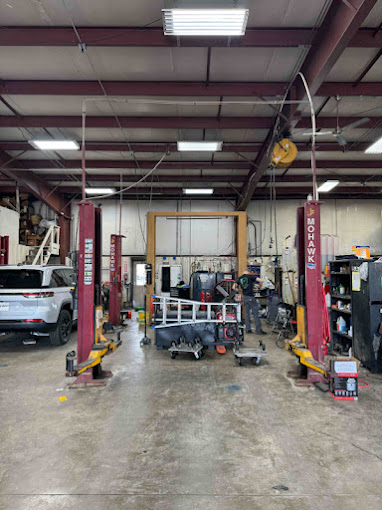
Car Lift For Sale Goodyear AZ | Preventing Shift and Wobble in Your Car Lift
The vehicle is less likely to shift or wobble during the lifting process, which can make a 4-post lift a better option for long-term storage. However, this lift design doesn’t provide the same level of access to the undercarriage, as the vehicle remains supported by...