
Car Lift For Sale Pomona CA
If you’re a restoration shop owner searching for a car lift for sale Pomona CA, chances are you’re not thinking about the sticker price alone — you’re thinking about the next twenty years of pan drops, oil changes, and the arm clearance you’ll need to get a socket onto a stubborn oil pan bolt without dropping the vehicle three times to reposition it. Restoration work is different from general repair: cars sit on the lift longer, get lifted and lowered more times per job, and often have oddball frame contact points that make arm configuration a bigger deal than horsepower ever was. This guide isn’t another spec-sheet buyer’s rundown — it’s a cost-of-ownership decision tree built specifically around the realities of gasket work, pan swaps, and the kind of shop floor where a lift has to earn its keep for two decades, not two years.
Why Oil Pan Gasket Work Changes the Math
Most car lift for sale Pomona CA listings are written for general repair shops that lift a car, do a quick job, and drop it. Restoration and gasket work is a different animal. A pan gasket job means the vehicle may be up on the lift for hours, sometimes with the engine partially disassembled, sometimes with a technician working directly underneath at full arm’s length with a torque wrench. That changes what actually matters in a lift purchase: arm reach and pad height become more important than raw lifting speed, and a low-profile arm package that lets you get a floor jack or transmission jack underneath while the car is already lifted can save you an entire extra lift cycle per job.
Oil pan work also means fluid contact is a certainty, not a possibility. Cheaper lifts with painted-only cylinders and exposed hydraulic lines in the drip zone corrode faster when they’re catching gasket sealant overspray and old oil weekly instead of occasionally. Shops that do this kind of work five or ten times a week wear out a budget lift’s finish and seals years before a general-service shop would. That’s the first fork in the decision tree: if gasket and pan work is a meaningful share of your bay’s workload, you’re already budgeting for a heavier-duty two-post or a low-rise/mid-rise setup, not the cheapest capacity-rated unit you can find.
This is also where used-lift shopping gets tricky, and we’ll cover that fully in the next section — because several of the requests we get for a car lift for sale Pomona CA are from shop owners who assumed a used lift would be a straightforward swap-in, only to discover the arm geometry didn’t suit the kind of pan-drop work their bay actually does.
The Decision Tree: Budget Tier One (Entry Two-Post)
If your budget puts you at the entry tier, you’re typically looking at a 9,000–10,000 lb two-post lift, asymmetric arms, and a standard drip-tray setup. This tier works fine for general car and light-truck service, but for a restoration shop focused on pan gasket work, there are two things to interrogate before buying: arm pad height range and cylinder accessibility. We’ve fielded calls from shop owners running exactly this class of lift — one had an older import two-post rated at 9,000 lbs where the safety mechanism had stopped engaging cleanly, and another had a similar-capacity lift where the cylinders had already been rebuilt once and were struggling on the way down. Both are classic symptoms of an entry-tier lift that’s been run hard on repetitive, fluid-exposed work without a service contract behind it.
Over a twenty-year horizon, entry-tier lifts almost always cost more in cumulative downtime and part replacement than they save upfront, unless your pan-gasket volume is genuinely low. If you’re doing this work daily, budget tier one is the wrong branch of the tree — move to tier two.
If you do land here, insist on a documented cylinder and safety-lock inspection before purchase, whether new or used, and register the lift for scheduled maintenance from day one. Our parts lookup page can help you identify cylinder seal kits and lock replacement parts by model if you’re inheriting an older unit.
The Decision Tree: Budget Tier Two (Mid-Range Two-Post, 10K–12K)
The second branch is where most serious restoration shops land, and it’s the sweet spot for anyone repeatedly asking about a car lift for sale Pomona CA for gasket-heavy work. A 10,000–12,000 lb two-post with a taller minimum ceiling clearance requirement — 18 feet or more is a common ask from shop owners with the room to spare — buys you low-profile arm options, better cylinder shielding, and enough capacity headroom that you’re not derating the lift every time a customer brings in a heavier engine swap or a truck with aftermarket weight added.
At this tier, the twenty-year cost of ownership math shifts in your favor for three reasons. First, arm and cylinder components are typically rated for higher duty cycles, which matters enormously when you’re lifting and lowering multiple times per gasket job. Second, mid-range lifts more commonly ship with better drip management, which protects the columns and hydraulic lines from the oil exposure that’s unavoidable in your line of work. Third, parts availability tends to be stronger over a two-decade span because mid-tier lifts from established brands stay in production or maintain parts compatibility longer than bargain imports.
One recurring theme from restoration shop inquiries is floor prep — several buyers specifically note no in-floor heating, which is good, since in-floor heat lines can complicate anchor bolt placement for two-post installs. If you’re shopping a car lift for sale Pomona CA at this tier, confirm your floor thickness and anchor spacing before finalizing arm configuration, since low-profile arm kits sometimes require slightly different base plate footprints.
The Decision Tree: Budget Tier Three (Four-Post or In-Ground)
The third branch applies if you want to work underneath a vehicle without touching the frame contact points at all — a real advantage for pan gasket work on restoration projects where paint, undercoating, or fragile pinch welds make standard two-post arm placement risky. Four-post lifts and in-ground lifts both solve this, but they solve it differently, and the twenty-year cost profile diverges sharply between the two.
Four-post lifts, including used four-post units bought for home-garage or small-shop installs, are simpler mechanically, have fewer under-floor components to maintain, and are generally easier to relocate if your shop ever moves. In-ground lifts, by contrast, integrate into the floor and offer a completely open shop floor when not in use — appealing for a restoration bay that also needs space for fabrication work, paint prep, or long-term project storage. We’ve had shop owners specifically ask about free estimates on in-ground lift service, precisely because in-ground systems carry higher install and long-term maintenance costs tied to hydraulic lines and cylinder wells buried in the slab.
Over twenty years, in-ground lifts often cost more to service due to that buried plumbing, while four-post lifts trade some floor footprint for lower lifetime service complexity. If pan gasket work is your bread and butter and you want unobstructed underside access without in-ground plumbing risk, a four-post with a sliding jack tray for pan removal is frequently the better twenty-year value, even though the upfront number can look similar to an in-ground quote.
New vs. Used: What Actually Changes the Twenty-Year Number
Every decision tree eventually asks: new or used? For a restoration shop shopping a car lift for sale Pomona CA, used lifts are tempting because the upfront savings look significant. But the real twenty-year cost hinges on three variables: remaining cylinder life, safety-lock condition, and arm/pad wear from prior duty cycles. A used lift that already needed a cylinder rebuild once is statistically more likely to need another rebuild sooner than a comparable lift bought new, simply because the seals and bores have already seen one full wear cycle.
That doesn’t mean used is always wrong — for shops with lower volume or tighter startup budgets, a well-inspected used two-post can be an excellent bridge purchase. The key is insisting on documentation: cylinder service history, safety mechanism function test, and arm pad wear assessment. If any of those can’t be verified, price the used lift as if a rebuild is imminent, because on a restoration shop’s duty cycle, it usually is within a few years.
New lifts remove that guesswork and typically come with a warranty window that covers the exact failure points restoration shops see most — cylinder seals and lock mechanisms under repetitive-cycle stress. If your shop runs pan gasket jobs multiple times a week, that warranty window alone can offset a meaningful share of the price gap between new and used over the first five years, before even counting the extended lifespan benefit.
Configuration Details That Matter More Than Capacity
Shop owners fixate on weight capacity, but for pan gasket work, configuration details drive the real twenty-year value. Low-profile arms matter because they let you slide a transmission jack or drain pan underneath without repositioning the vehicle — a small time savings per job that compounds into serious labor savings over two decades of daily use. Overhead clearance matters just as much: an 18-foot minimum ceiling height request is common among shops running taller two-post configurations, and skimping on ceiling clearance up front can lock you out of upgrading arm length or switching lift types later without a full re-install.
Floor conditions matter too. No in-floor heat, adequate slab thickness, and enough open floor space around the lift for jack stands, drain pans, and rolling tool carts all affect not just install feasibility but daily workflow efficiency. A car lift for sale Pomona CA that looks perfect on spec sheets can still be a poor fit if your bay layout doesn’t give techs room to move drain equipment freely during pan removal.
Finally, consider service access over the full twenty years, not just install day. Lifts installed with easy access to hydraulic fittings and lock mechanisms cost less to maintain because service techs spend less billable time just reaching components. If you’re comparing two similarly capable lifts, the one with better access to serviceable parts almost always wins the long-term cost comparison, even if the initial quote is slightly higher.
How Local Install & Service Actually Works Near Pomona
Auto Lift Services is headquartered in Ames, Iowa, but we deliver genuine local install and service to restoration shops searching for a car lift for sale Pomona CA through two channels. First, we maintain a network of vetted 1099 subcontractor technicians in California who we train and support directly, so the tech showing up at your bay understands both the lift hardware and the safety-lock, cylinder, and anchor standards we require on every job. Second, for more complex installs — four-post relocations, in-ground service calls, or configurations with nonstandard arm packages — we frequently fly one of our own Iowa-based technicians out to work alongside the local tech on-site, so your shop gets factory-trained oversight without paying for a full remote install team.
We don’t operate a physical shop or office in Pomona, and we’re upfront about that. What we do provide is real, hands-on install and service coordinated from our Iowa base, backed by the same parts and support network we use for shops across the country. If you’re planning a two-post, four-post, or in-ground install and want a straight answer about arm configuration, ceiling clearance, or twenty-year maintenance planning before you commit, browse our two-post lift collection or reach out directly — we’ll walk the decision tree with you before you spend a dollar.
About the Author
Josiah Ragsdale is the founder of Auto Lift Services. Based in Ames, Iowa, our team installs, services, and stocks parts for every major lift brand — from a home-garage 4-post through 30,000 lb commercial and 40K+ heavy-duty. Have a question or need a quote? Call 800-674-9302 or email [email protected].
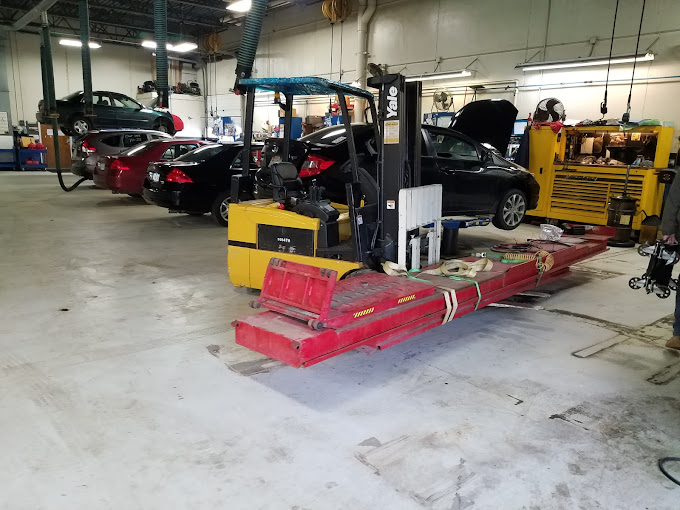
Car Lift For Sale Pomona CA | Hydraulics Following the Flow
The ability to control the motion of hydraulic actuators with such precision allows for the creation of highly specialized and effective machinery, making hydraulic systems an integral part of modern industrial design. Ultimately, the power of hydraulic systems lies...