
cl10v3 challenger lift parts for sale
For a dealership service manager, sourcing cl10v3 challenger lift parts for sale is rarely just a maintenance errand — it’s a bay-layout problem wrapped inside a parts problem. The CL10V3, with its symmetric 10,000-lb two-post configuration, is one of the most common lifts anchored into dealership service drives across the country, and it earns its keep on exhaust and driveline work precisely because the arms and columns clear the way a vehicle’s undercarriage needs. But when a pad wears thin, a foot cracks, or a sheave goes missing on the non-power side, the fix isn’t just “order a part” — it’s making sure the replacement geometry still respects the swing radius, column spacing, and drive-through clearance your bay was built around. This piece looks at that intersection: real dimensions, real workflow, and where to find cl10v3 challenger lift parts for sale without disrupting a bay that’s already tuned for exhaust and driveline access.
Why the CL10V3’s Geometry Matters for Exhaust and Driveline Bays
The CL10V3 is a symmetric two-post lift, meaning both arms extend at roughly the same angle on either side of the columns rather than the offset stance you’d see on an asymmetric model. That symmetry is exactly why so many dealership service managers standardize on it for exhaust and driveline bays: with the vehicle centered instead of shifted toward the rear column, techs get consistent clearance under the transmission tunnel, driveshaft, and exhaust system on both sides. A 10,000-lb capacity two-post like the CL10V3 typically runs a rise in the 72-75 inch range with columns spaced to accommodate most light and medium duty trucks and vans without arm-length compromises.
When you’re servicing dual exhaust systems or dropping a driveshaft on a 4×4, that consistent, centered clearance is the difference between a 20-minute job and a 45-minute fight with arm placement. This is also why replacement parts matter more than they might on a single-purpose lift: a pad that’s a half-inch taller than spec, or a foot that changes the arm’s resting height, can quietly shift how much clearance a tech has when the vehicle is at full rise. Ordering cl10v3 challenger lift parts for sale that match OEM tolerances — not generic universal substitutes — keeps that clearance predictable across every bay in the shop, which matters more in a multi-bay dealership environment than almost anywhere else.
Understanding this geometry also helps service managers plan technician assignments: a bay with slightly worn pads or mismatched foot heights isn’t unsafe on its own, but it can create just enough inconsistency that a tech working driveline access has to improvise, which slows throughput across a whole shift.
Reading a Parts Request Like a Bay Audit
One of the most common service tickets we see from dealership accounts looks deceptively simple: a lift needs “four low pads and two 6-inch ones,” plus a matching set of taller feet. That kind of mixed-height order isn’t a mistake — it’s usually the result of a bay that’s been in service long enough that wear has become uneven across the four contact points. Front columns often see more cycles than rear columns in exhaust and driveline bays because techs frequently re-position vehicles for tailpipe access, and that uneven cycling shows up as uneven pad wear.
When a service manager orders four 10-inch feet alongside a mix of low and 6-inch pads, they’re effectively re-leveling the entire lift’s contact geometry, not just swapping worn rubber. That’s a smart approach, and it’s why we always recommend ordering a full matched set of cl10v3 challenger lift parts for sale rather than one-off replacements — mismatched pad heights across the four points can introduce a slight tilt that’s imperceptible to the eye but very perceptible to a tech working underneath a driveshaft at full extension. If your bay has been running for several years without a full pad and foot audit, it’s worth measuring all four contact points before placing an order. Our parts lookup page can help you cross-reference exact part numbers against your lift’s serial and model designation.
Sheave and Cable Failures: A Different Kind of Bay Disruption
Pads and feet are wear items; sheaves are structural. When a CL10V3QC (the quick-connect hydraulic variant) is missing a sheave and pin on the non-power side, the lift typically can’t be operated safely until it’s repaired — which means a bay that was built for exhaust and driveline access is suddenly offline. We’ve handled exactly this scenario: a lift already standing and installed, non-power side sheave and pin missing, needing both the part and a same-visit install quote.
This is where sourcing cl10v3 challenger lift parts for sale gets tactical rather than routine. A missing sheave isn’t something to batch into a quarterly parts order — it’s a bay-down emergency in a working dealership drive. The practical move is to order the sheave and pin together as a matched set (mismatched pin tolerances can cause premature cable wear) and pair the order with an install appointment rather than shipping parts to sit in a parts room while the bay stays dark. For dealership managers juggling multiple bays, a single unplanned bay closure on the non-power side can back up exhaust and driveline jobs for days, so we prioritize expedited shipping on structural components like sheaves, cables, and pins specifically because of that downstream scheduling pressure.
Pump and Reservoir Issues That Masquerade as Lift Problems
Not every service call about a CL10-XP9-QC or similar CL10 variant is actually a lift-geometry problem. We’ve fielded calls describing a lift “sparking” in a bay, which on inspection traced back to a broken capacitor on the side of the hydraulic pump — not the lift structure at all. Similarly, reservoir damage from a backing-into-the-unit incident is a pump-system issue, not a column or arm issue, even though it can look alarming to a technician mid-shift.
The reason this matters for exhaust and driveline bays specifically: a pump fault often shows up as inconsistent rise speed or the lift stalling partway up, which is exactly the height range where a tech is trying to position a driveshaft or exhaust component. Diagnosing correctly — pump versus structure — saves a dealership from ordering the wrong category of cl10v3 challenger lift parts for sale and waiting on a shipment that never fixes the actual fault. When you call in a bay issue, describe the symptom (sparking, slow rise, uneven rise) rather than guessing at the part, and we’ll help narrow it to pump, reservoir, or structural before you commit to an order.
Ordering for a Multi-Bay Dealership Account
Dealership service departments rarely order one part at a time. A typical account-based order might combine a hydraulic hose assembly for one bay with a set of arm pads for another, all shipped to a single service department address under one purchase order and account number. That account-based model is how most dealership parts departments prefer to operate, and it’s how we structure repeat orders for cl10v3 challenger lift parts for sale — one PO, one account number, multiple line items, delivered together so your parts room isn’t opening five separate boxes across two weeks.
If your dealership runs several CL10V3 or CL10-XP9-QC units across different bays, it’s worth setting up a standing account with us so recurring items — pads, feet, hoses, sheaves — can be ordered against a consistent part-number list rather than re-identifying the lift model every time. This also helps our team flag when a part number has been superseded or updated, which happens periodically as Challenger revises components. Our two-post lift collection lists current CL10V3 configurations if you’re comparing a replacement unit alongside parts for an aging bay.
When to Repair vs. When to Reconfigure the Bay
Not every worn CL10V3 should simply be re-padded and sent back into rotation. If a bay has seen years of exhaust and driveline work with heavy under-lift positioning, it’s worth asking whether the arm restraint pins, cable tensioning, and column alignment are still within factory tolerance — not just whether the visible pads look worn. A full geometry check, done alongside a parts order, catches issues that a pad swap alone won’t fix, like a column that’s developed a slight lean from years of uneven loading on one side of a symmetric lift.
For dealership managers weighing a repair versus a bay reconfiguration, the deciding factor is usually cycle count and vehicle mix. A bay that primarily services light passenger vehicles can often run another several years on a pad-and-foot refresh alone. A bay handling heavier trucks and frequent driveline drops benefits from a more thorough inspection — cables, sheaves, hydraulic lines — before committing to another multi-year service cycle. Either way, ordering cl10v3 challenger lift parts for sale as a planned maintenance decision, rather than a reactive one, keeps your exhaust and driveline bays predictable instead of becoming the bay everyone avoids scheduling into.
How Auto Lift Services Supports Dealership Bays Nationwide
Auto Lift Services is based in Ames, Iowa, and that’s where our parts inventory, technical staff, and dispatch coordination live — but our install and service work reaches dealership service departments across the country. We do this two ways: through a nationwide network of 1099 subcontractor technicians we personally train, vet, and support in-market, and for more complex jobs — like a sheave and pin replacement on a standing, already-installed CL10V3QC, or a pump swap on a sparking bay — we often fly one of our own Iowa-based technicians out to work directly alongside the local tech on-site.
That combination means a dealership ordering cl10v3 challenger lift parts for sale from us isn’t just buying a box of components — they’re getting a team that understands the install context, can coordinate a same-visit repair, and has already handled the exact model and fault pattern before. If your service department is weighing a repair quote, a full pad-and-foot audit, or a bay reconfiguration, call us at 800-674-9302 and we’ll walk through your bay’s specific dimensions and vehicle mix before recommending parts.
About the Author
Josiah Ragsdale is the founder of Auto Lift Services. Based in Ames, Iowa, our team installs, services, and stocks parts for every major lift brand — from a home-garage 4-post through 30,000 lb commercial and 40K+ heavy-duty. Have a question or need a quote? Call 800-674-9302 or email [email protected].
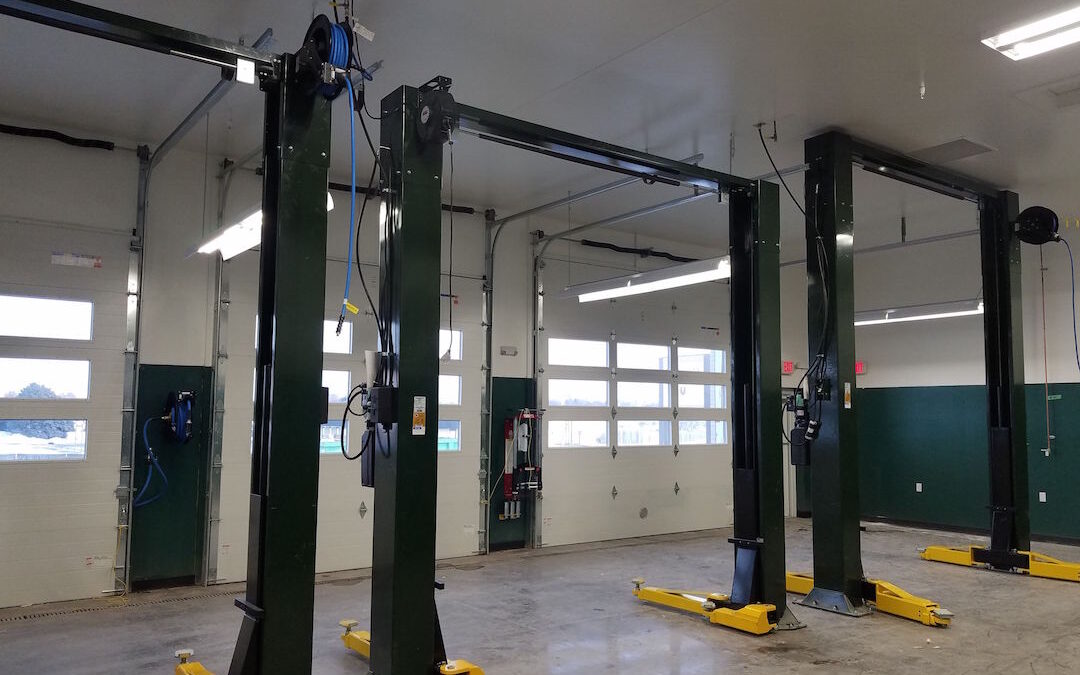
cl10v3 challenger lift parts for sale | Up for the Challenge
Welcome back to our daily time walking through how to install cl10v3 challenger lift parts for sale . We previously covered how to remove and reinstall the sheaves on a 2 post lift, the restraint gears, the hydraulic hose, the equalizer cables, and now we will start... cl10v3 challenger lift parts for sale | We Can Supply It All
Well thanks for tuning in again for part three of the how to or guide on how to put cl10v3 challenger lift parts for sale in particular the new sheaves on to your 2 post lift. This one is really turning out to be a lengthy process to describe to you however it does... cl10v3 challenger lift parts for sale | We’ll Do The Right Thing
It has been brought to our attention here at automotive lift services that some who were looking for cl10v3 challenger lift parts for sale and found the restraint gears that they were needing were looking for a how to on replacing the restraint gears on a 2 post... cl10v3 challenger lift parts for sale | These Parts Are Great
Cables are a very common part on a challenger 2 post lift that you will need to replace every couple years or so. And we have cl10v3 challenger lift parts for sale. Whether you are buying cl10v3 challenger lift parts for sale for yourself or someone else or if you... cl10v3 challenger lift parts for sale | Buy Them Here
We previously spoke about the sheaves on the 2 post lift and it was brought to our attention that many of you who are trying to get your hands on cl10v3 challenger lift parts for sale may need some assistance with actually installing the new sheaves that you have...